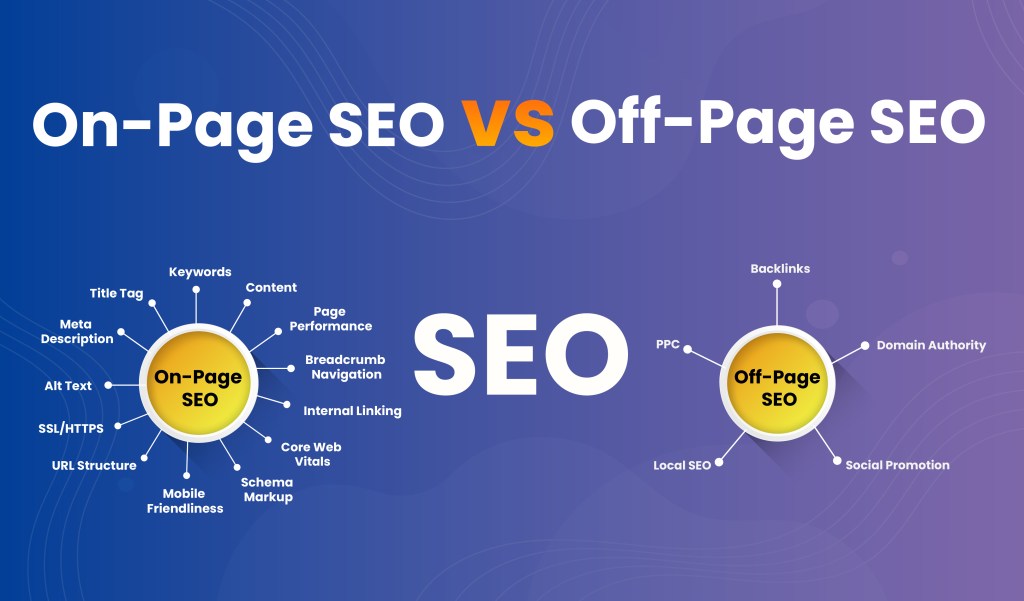
In the dynamic world of digital marketing, mastering Search Engine Optimization (SEO) is essential for online success. SEO can be broadly categorized into two primary components: on-page SEO and off-page SEO. While both are critical for improving your website’s visibility and search rankings, they focus on different aspects of optimization. In this article, we’ll explore the differences between on-page and off-page SEO, their significance, and how to effectively implement both strategies.
What is On-Page SEO?

On-page SEO refers to the practices and techniques applied directly on your website to optimize it for search engines and improve user experience. This includes:
- Content Optimization: Creating high-quality, relevant, and valuable content that addresses the needs of your audience.
- Title Tags and Meta Descriptions: Crafting descriptive and keyword-rich title tags and meta descriptions to improve click-through rates.
- Header Tags: Structuring your content with header tags (H1, H2, H3) to enhance readability and organization.
- URL Structure: Using descriptive and concise URLs that include relevant keywords.
- Internal Linking: Linking to other pages within your site to improve navigation and distribute page authority.
- Mobile Optimization: Ensuring your website is responsive and provides a seamless experience across all devices.
Why On-Page SEO Matters
- Search Rankings: Effective on-page SEO increases the likelihood of ranking higher in search engine results.
- User Experience: Optimized content and site structure enhance user engagement and satisfaction.
- Relevance: By aligning your content with user search intent, you can attract the right audience to your site.
What is Off-Page SEO?
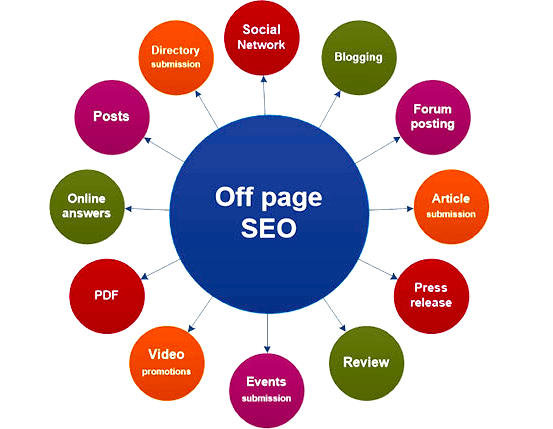
Off-page SEO refers to the activities and strategies implemented outside your website to influence its ranking in search engine results. Key components of off-page SEO include:
- Link Building: Acquiring backlinks from reputable websites to signal to search engines that your site is trustworthy.
- Social Media Engagement: Promoting your content on social media platforms to increase visibility and drive traffic.
- Brand Mentions: Gaining visibility through mentions of your brand or content across the internet, even without direct links.
- Online Reputation Management: Managing your brand’s online presence by responding to reviews and engaging with your audience.
Why Off-Page SEO Matters
- Domain Authority: Strong off-page SEO practices increase your website’s domain authority, making it more competitive in search rankings.
- Referral Traffic: Backlinks from high-traffic sites can drive significant referral traffic to your website.
- Brand Awareness: Engaging in off-page SEO can help establish your brand and increase its recognition within your niche.
Key Differences Between On-Page and Off-Page SEO
| Aspect | On-Page SEO | Off-Page SEO |
|---|---|---|
| Focus | Optimizing elements within your website | Activities performed outside your website |
| Techniques | Content creation, title tags, internal linking | Link building, social media marketing |
| User Experience | Direct impact on user experience | Indirect impact through increased authority |
| Control | Greater control over on-page elements | Less control over external factors |
| Measurement | Measured by on-site metrics (bounce rate, etc.) | Measured by backlinks, social shares, mentions |
Best Practices for Implementing On-Page and Off-Page SEO
On-Page SEO Best Practices
- Conduct Keyword Research: Identify relevant keywords for your content and incorporate them naturally.
- Create Quality Content: Focus on producing informative, engaging, and original content that meets user needs.
- Optimize Images: Use descriptive file names and alt text for images to enhance SEO and accessibility.
- Use Analytics Tools: Monitor your website’s performance with tools like Google Analytics and adjust your strategies as needed.
Off-Page SEO Best Practices
- Build Quality Backlinks: Engage in guest blogging, broken link building, and outreach to acquire high-quality backlinks.
- Leverage Social Media: Share your content on social platforms to increase visibility and encourage engagement.
- Participate in Online Communities: Engage in forums and discussions relevant to your niche to build relationships and promote your expertise.
- Monitor Your Brand Reputation: Use tools to track brand mentions and reviews, responding promptly to feedback.
Conclusion
Both on-page SEO and off-page SEO play vital roles in enhancing your website’s visibility and performance in search engine results. While on-page SEO focuses on optimizing elements within your site, off-page SEO builds your website’s authority and relevance through external activities. By implementing effective strategies for both aspects, you can create a robust SEO framework that drives organic traffic, improves search rankings, and enhances user experience. Remember, a successful SEO strategy requires a balanced approach, leveraging both on-page and off-page techniques for optimal results.
 Digital Marketing
Leave a comment